Lawn Pest Control in Missouri: Common Yard Pests and When to Call a Professional

A healthy, green lawn is one of the small luxuries of Missouri homeownership, and it’s usually the first thing neighbors notice about a property. So when the grass starts thinning in patches, or the kids can’t play outside without coming in covered in bites, most homeowners assume it’s a watering problem or a bad mowing schedule. Often, though, the real issue is pests. Lawn pest control covers a wider range of problems than most people expect, from insects feeding on grass roots below the surface to biting pests that turn a backyard into a place nobody wants to spend time. Here’s what’s actually behind the most common Missouri lawn problems, and when it’s time to call in a professional.

The Insects Feeding On Your Grass From Below

Some of the most damaging lawn pests never show themselves on the surface. White grubs, the larval stage of Japanese beetles and June bugs, live just below the soil line and feed on grass roots all summer long. A lawn under grub attack often looks drought-stressed even when it’s getting plenty of water, with irregular brown patches that pull up like loose carpet because the roots underneath have already been eaten away. Chinch bugs cause similar-looking damage but work at the surface instead of underground, sucking moisture out of grass blades in the sunniest, driest parts of the yard. Both pests are easy to miss because the damage looks so much like a watering or mowing issue. A simple way to check: cut into a section of the suspect turf and peel it back. If it lifts easily and you see C-shaped white grubs underneath, lawn pest control, not more water, is what the yard actually needs.

Ants, Moles, and the Pests That Reshape Your Yard

Not every lawn pest problem shows up as dead grass. Pavement ants and other aggressive ant species build mounds that make mowing difficult and can turn a yard into a hazard for kids and pets. Moles are a different kind of problem entirely: they’re not actually after your grass, they’re tunneling through the yard hunting for the grubs and earthworms living in the soil, which means a mole problem is very often a sign of a grub problem underneath it. We’ve covered mole damage and treatment options in more detail elsewhere, but it’s worth remembering that treating the moles without addressing what’s attracting them to the yard in the first place tends to be a short-term fix at best.
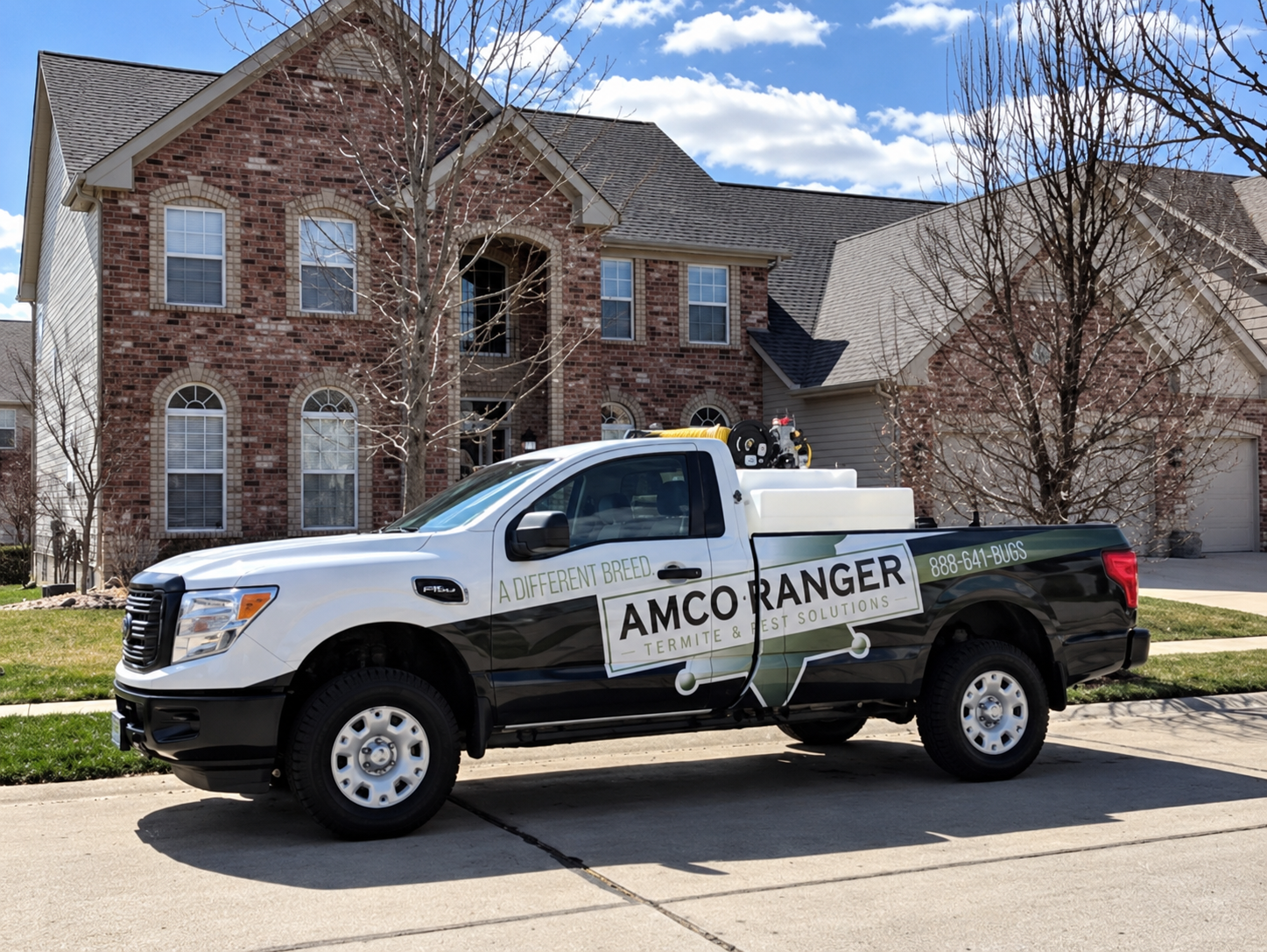
Amco Ranger service truck outfitted for residential lawn pest control treatments in the St. Louis area

The Yard Pests That Bite Back

Some lawn pests aren’t damaging the grass at all, they’re making the yard unusable. Fleas and ticks thrive in tall grass, leaf litter, and the shaded edges where lawns meet tree lines, and Missouri’s humid summers give both plenty of time to build up large populations. Ticks are a genuine health concern, not just a nuisance; the CDC recommends checking for ticks after any time spent in grassy or wooded areas and treating yards as part of a broader prevention strategy. Mosquitoes are the other major complaint, breeding anywhere water collects, from clogged gutters to low spots in the yard that hold rainwater. The EPA’s mosquito control guidance points out that consistent yard maintenance, especially removing standing water, is one of the most effective things a homeowner can do before any treatment is even needed.

DIY Lawn Pest Control vs. Calling a Professional

Store-bought granular treatments and sprays can knock back a light pest population, but they typically only treat the surface, not the underlying infestation, and timing matters more than most DIY products account for. Grub treatments applied at the wrong time of year, for instance, largely miss the window when the larvae are actively feeding near the surface. A professional lawn pest control program identifies which pest, or combination of pests, is actually present, treats at the right depth and time of year, and follows up to confirm the treatment held. For homeowners who’ve tried a big-box spray with no results, that’s usually why: the product wasn’t wrong, the diagnosis was.

When to Call a Professional

Watch for these warning signs that it’s time to bring in a professional pest control team rather than cycling through more store-bought treatments:

  • Irregular brown patches that pull up easily
  • Ant mounds that keep reappearing after mowing
  • Mole tunnels across the yard
  • A yard nobody wants to sit in because of ticks and mosquitoes

Amco Ranger has been protecting Missouri homes and yards for more than 60 years, and every inspection is backed by a 100% satisfaction guarantee. Schedule a free, no-obligation inspection and get an actual diagnosis before spending another season guessing.

Signs of Termite Damage Missouri Homeowners Should Never Ignore

By the time most homeowners notice termite damage, the termites have usually been at work for months, sometimes years. That’s the uncomfortable truth about termites: they don’t announce themselves. There’s no scratching in the walls, no obvious smell, no single dramatic moment that tells you something’s wrong. Instead, the signs of termite damage show up quietly, in places most people don’t think to check, until the damage is expensive enough to notice.

Missouri’s climate makes this a bigger concern than a lot of homeowners realize. Warm, humid summers create ideal conditions for subterranean termites, the most common and most destructive species in our region, to thrive in soil right up against your home’s foundation.

Why Termite Damage Is So Easy to Miss

Termites eat wood from the inside out, following the grain and leaving the surface intact until the damage is severe. A support beam or floor joist can look completely normal from the outside while it’s structurally hollow underneath. That’s exactly why so many homeowners are caught off guard, they’re checking for damage the way they’d check for water damage or mold, looking for obvious discoloration or texture changes, when termite damage often hides in plain sight.

Amco Ranger pest control technician inspecting a home's kitchen cabinetry for signs of termite activity

Signs of Termite Damage Worth Checking For

  • Mud tubes along the foundation. Subterranean termites build pencil-width mud tubes to travel between the soil and your home while staying protected from open air. Finding these along your foundation, crawl space, or basement walls is one of the clearest signs of active termite activity.
  • Wood that sounds hollow when tapped. Try tapping suspect areas, baseboards, door frames, structural beams, with the handle of a screwdriver. Wood that sounds papery or hollow instead of solid may already be compromised internally.
  • Discarded wings near windowsills or doors. When a termite colony matures, winged reproductive termites, called swarmers, leave to start new colonies. They shed their wings almost immediately after landing, so small piles of discarded wings near light sources are a strong signal a colony is established nearby.
  • Buckling paint or wood that looks water-damaged. Termite activity can cause wood to warp or paint to bubble in ways that closely resemble water damage, which is part of why it’s so often misdiagnosed by homeowners doing their own inspection.
  • Frass, or termite droppings, resembling small piles of sawdust. Drywood termites in particular push these pellets out of small holes in infested wood, leaving tiny mounds that are easy to mistake for regular household dust or debris.
  • Tight-fitting doors and windows. As termites tunnel through door and window frames, the wood can warp just enough to make doors and windows stick or fail to close properly, an easy detail to write off as “the house settling.”

Why Catching It Early Actually Matters

Termite damage doesn’t stay contained. Left alone, a colony continues expanding, and the structural repairs needed grow right along with it. What might be a straightforward, affordable fix if caught early can turn into major structural work if a colony has had free rein for a year or two. Regular inspections are less about proving you have termites and more about catching activity before it becomes a five-figure repair.

What to Do If You Spot Any of These Signs

If any of this sounds familiar, resist the urge to just keep an eye on it. Termite colonies don’t slow down while you wait, and DIY treatments rarely reach the full colony, since the visible activity is usually a small fraction of what’s actually working through the wood. A professional inspection can confirm whether you’re dealing with active termites, identify how far the damage extends, and map out a treatment plan that addresses the colony rather than just the symptoms.

Amco Ranger has been serving homeowners throughout the greater St. Louis metro area for more than 60 years, and every inspection is backed by a 100% satisfaction guarantee. Our trained technicians know exactly where Missouri termites tend to hide and what early-stage damage actually looks like in person, not just in a photo.

Don’t Wait for the Damage to Become Obvious

Schedule your free termite inspection with Amco Ranger today. Catching termite activity early is the difference between a manageable treatment and a major repair bill, and our team is ready to help you find out which one you’re dealing with before it gets worse.

Why Amco Ranger’s Service Plans Beat National Chains

You typed “pest management near me” into Google and the results looked exactly like they always do: a national brand at the top, a toll-free number that connects to a call center in another time zone, and a pricing page that leaves you with more questions than answers.

If that sounds familiar, you already know the frustration. Big pest control chains have the massive advertising budgets, but they don’t always have what St. Louis homeowners actually need: local knowledge, straightforward pricing, and a company that treats you like a neighbor, not a number in a database.

That’s exactly where Amco Ranger Termite & Pest Solutions comes in. As a family-owned company protecting St. Louis homes since 1965, we offer residential pest management plans built around your specific needs, not a generic corporate playbook.

What St. Louis Homeowners Are Really Dealing With

Before comparing companies, it helps to understand what you’re up against. Missouri’s humid summers and older housing stock create near-perfect conditions for several high-pressure pests. If you’re searching for pest management near me in the St. Louis area, you’re likely facing:

  • Subterranean Termites: Missouri’s most destructive pest. Professional termite treatment is essential here, as they can cause structural damage long before they are spotted.
  • Brown Recluse Spiders: St. Louis sits squarely in their territory. Controlling them requires a targeted, experienced approach that national “general” sprays often miss.
  • Mice and Rodents: As temperatures drop, rodents seek entry points into local homes. Once inside, they reproduce quickly and require professional exclusion.
  • Mosquitoes & Ticks: Missouri’s warm months bring intense outdoor pressure that can make your yard unusable without a specialized shield.

According to the U.S. Environmental Protection Agency (EPA), effective pest management relies on Integrated Pest Management (IPM)—a science-based approach that addresses the root cause of infestations rather than just treating the symptoms. That is the philosophy we’ve used for over 60 years.

The Problem With National Pest Control Chains

When you click on a national brand, you often run into “The Corporate Gap”:

  1. Rotating Technicians: You never know who is entering your home, and they often lack deep knowledge of Missouri-specific pest cycles.
  2. Standardized Solutions: Their “one-size-fits-all” approach treats a home in St. Louis the same way it treats one in Phoenix.
  3. The 1-800 Barrier: If you have a specific concern, you’re often stuck navigating a phone tree rather than speaking to a local expert.

The Missouri Department of Agriculture oversees the strict licensing and safety standards for our state. A local company like Amco Ranger, with deep roots in the community, takes these standards personally because we live in the same neighborhoods we protect.

How Amco Ranger’s Plans Are Built Differently

We believe in transparency. Instead of “hidden” pricing, we offer tiered residential plans that give you real choices:

  • Ultimate Defense Starting at $58/month: Our entry-level plan covering indoor and outdoor pests with bi-monthly service. This includes carpenter ants, cockroaches, mosquitoes, wasps, and more.
  • Silver Bundle Starting at $85/month: Adds rodent control plus termite protection. By bundling these, homeowners in St. Charles and St. Louis get significantly more value than purchasing standalone termite contracts.
  • Gold Bundle Starting at $119/month: The most comprehensive protection available, adding Brown Recluse spider control and bed bug coverage.

All plans are backed by our 100% Satisfaction Guarantee. If you aren’t happy with the results, we’ll make it right. It’s that simple.

An Amco Ranger Termite & Pest Solutions service truck parked in a residential St. Louis neighborhood, providing local pest management near me for Missouri homeowners.

Why “Local” Is a Trust Factor

Amco Ranger is QualityPro Certified and holds a GreenPro certification—an accreditation earned by fewer than 3% of pest management companies in the U.S. This means our technicians undergo rigorous background checks, drug screenings, and continuous training that exceeds national standards.

When you call us about lawn moles or a termite concern, you are speaking to experts who have maintained an A+ Rating with the BBB for decades.

Answers to the Questions St. Louis Homeowners Are Actually Asking

How much does it cost to have pest control out?

For ongoing pest management in the St. Louis area, our plans start as low as $58 per month for bi-monthly service. While one-time visits vary, an ongoing plan offers the best protection against Missouri’s year-round pest cycles.

What is the hardest pest to get rid of?

In the St. Louis area, Brown Recluse spiders and subterranean termites are the most difficult to fully eliminate. Both require specialized equipment and a deep understanding of local construction styles, something we’ve perfected since 1965.

Is professional pest management worth the cost?

For recurring or serious infestations, yes, significantly so. The EPA notes that DIY pesticide misuse can actually increase health risks in the home, and most over-the-counter products don’t address the root cause of infestations. A professional plan that prevents ongoing damage costs far less than the repairs that follow an untreated termite problem or a recurring rodent infestation.

Ready to Protect Your Home the Smart Way?

If you’re in St. Louis, St. Charles, or the surrounding area and searching for pest management near me, the answer is right in your backyard. We offer free, no-obligation inspections—no pressure, just an honest assessment of your home.

Three generations. Sixty years. One mission.

Schedule your Free Priority Inspection today or call us at:

  • St. Charles: (636) 441-BUGS (2847)
  • St. Louis: (314) 373-BUGS (2847)


Pest Control Services Near Me in St. Louis: What Local Homeowners Should Look For (And Why Amco Ranger Delivers)

If you’ve found yourself searching for pest control services near me, you’re probably dealing with something that can’t wait: a trail of ants across the kitchen counter, the telltale signs of termites in the basement, or something scratching inside the walls at night. Whatever brought you here, you deserve more than just a generic solution from a company that doesn’t know St. Louis. You deserve a local expert who understands the specific pest pressure in this region and has the experience to back it up.
Here’s what to look for when choosing a pest control provider in the St. Louis area and why the right choice makes all the difference.

Why Local Expertise Matters More Than You Think

St. Louis has its own unique pest challenges. The region’s humid summers, wet springs, and older housing stock create ideal conditions for everything from subterranean termites and brown recluse spiders to mice, cockroaches, and mosquitoes. A national chain might follow a one-size-fits-all playbook, but a locally rooted company understands the seasonal cycles, the soil conditions, and the neighborhoods where certain pests are more prevalent.

Missouri also has specific regulatory standards for pest control. Licensed applicators in the state operate under rules set by the Missouri Department of Agriculture, which helps ensure that the products and methods being used in your home meet safety and environmental standards. Before hiring anyone, it’s worth confirming they’re fully licensed and operating in compliance with state guidelines.

For a deeper look at common household pests in Missouri and how they behave, the University of Missouri Extension offers excellent science-based resources to help homeowners stay informed.

Pest control technician applying treatment along kitchen baseboards during a residential pest control service visit.

What to Look for When Choosing Pest Control Services Near Me

When you’re evaluating your options, here are the key things that separate a trustworthy provider from one you’ll regret calling:

Years of Experience

Pest control isn’t a field where you want a company that’s still figuring things out. Look for a provider with a proven track record, ideally decades of it. Experience means they’ve encountered just about every infestation scenario imaginable and know exactly how to respond.

Licensed and Trained Technicians

Every technician entering your home should be properly licensed and continuously trained. Pest science evolves, and so do the most effective treatment methods. Ask whether a company invests in ongoing education for its staff.

Transparent Pricing and Service Plans

There’s nothing more frustrating than a pest control bill full of surprises. Look for companies that are upfront about what’s included in their service plans, what follow-up looks like, and whether they back their work with a satisfaction guarantee.

Eco-Friendly Options

If you have children, pets, or simply care about the environment, ask whether the company offers eco-friendly or low-impact treatment solutions. More and more St. Louis homeowners are prioritizing green pest control and the best providers have made it part of their standard offering, not just an upsell.

The Pest Problems St. Louis Homeowners Face Most

Understanding what you’re up against is the first step toward protecting your home. In this area, some of the most common pest issues include:

  • Termites: Missouri’s subterranean termites can cause serious structural damage before homeowners even notice. Early detection and professional treatment are critical.
  • Brown Recluse Spiders: St. Louis is squarely in brown recluse territory. These spiders are secretive but potentially dangerous, and controlling them requires a targeted, knowledgeable approach.
  • Mice and Rodents: As temperatures drop, mice look for ways inside. Once they’re in, they’re difficult to remove without professional help.
  • Cockroaches: Beyond being unpleasant, cockroaches can trigger allergies and contaminate food. They’re tough, adaptable, and require more than store-bought sprays to eliminate.
  • Mosquitoes: Outdoor living in St. Louis summers means mosquito pressure. Ongoing treatment programs can reclaim your yard season after season.

Each of these pests require a specific treatment strategy. A one-spray-fits-all approach simply doesn’t work.

Why Amco Ranger Is the Answer When You Search Pest Control Services Near Me

We’ve been doing this since 1965. A lot has changed in pest control over the decades, products, methods, regulations, but the core of what we do hasn’t: show up, do the job right, and stand behind the work. We’re a local company, and we take it seriously. Here’s a look into how we approach things:

We back our work with a satisfaction guarantee

If something isn’t resolved to your satisfaction, we want to know about it and make it right. That’s the commitment behind our 100% satisfaction guarantee, it’s not just a tagline.

We keep pricing straightforward

Nobody likes surprise charges. We aim to be transparent about what’s included in your service and what follow-up looks like before we ever start the work.

We know the area

We serve St. Louis, St. Charles, Lincoln, and Warren Counties. Focusing on a defined service area means our technicians know the local pest pressures and can respond quickly when you need help.

We handle a wide range of services

From termites and bed bugs to wildlife removal and lawn care, we can address more than just the immediate problem, all under one roof.

Ready to Protect Your Home?

If you’re in the St. Louis area and looking for pest control services near me, we’d love the chance to earn your trust. We offer free, no-obligation inspections. No pressure, just an honest look at what’s going on and what your options are.


How to Deal with Mice in Your Walls: Prevention and Removal Tips

It starts with a sound. A faint scratching behind the drywall—easy to ignore—at first. But before long, you hear it again, and again, and again, until it’s no longer ignorable. The sound is then accompanied by strange smells or chewed wires.

If you’re experiencing this—you might have mice in your walls.

This common issue some homeowners see can lead to serious damage if not addressed quickly and professionally. At Amco Ranger, we’ve helped Missouri homeowners eliminate rodents for decades. In this blog post, we’ll explore how to prevent, detect, and remove mice from your walls—and when it’s time to bring in the pros.

How Do Mice Get Into Walls in the First Place?

Good question. If you’re dealing with this problem, this might be one of the first questions you ask. Mice can squeeze through holes as small as a dime, which makes it surprisingly easy for them to get inside wall cavities. They often enter through gaps in the foundation, siding, vents, or where utility lines meet your home.

Once inside, your walls offer the ideal nesting environment for the pest: quiet, warm, and hidden. Mice are especially active in fall and winter as they seek shelter from the cold winter months—a common seasonal problem we see across Missouri.

For a Missouri-specific breakdown on house mice behavior and entry points, check out this resource from the University of Missouri Extension.

Signs of Mice In Your Walls

You think you hear them—but how do you know for sure? Here are the most common signs that you may have some unwanted guests living inside your walls:

  • Scratching or scurrying sounds, especially at night
  • Foul or musty odors coming from vents or baseboards
  • Small droppings near wall edges or entry points
  • Gnawed wires, insulation, or drywall
  • Pets showing unusual interest in certain wall areas of your home

If any (or all) of these signs sound familiar, it may be time to take action before the problem gets worse. Learn more about how to identify signs of mice in your home with this guide.

Mouse among chewed wires on a floor, showing damage caused by mice in walls and the risks of rodent infestations.

DIY Prevention Tips to Keep Mice Out

Before you deal with a full-blown infestation, here’s some DIY tips for prevention:

  • Seal Entry Points
    Use caulk, steel wool, and weatherstripping to seal gaps around doors, windows, utility lines, and foundation cracks.
  • Eliminate Food Sources
    Store food in airtight containers, clean up crumbs, and secure trash cans with tight-fitting lids. Don’t forget pet food and birdseed.
  • Tidy Up the Yard
    Keep vegetation trimmed, store firewood away from the house, and remove any clutter that can offer shelter.

Prevention is most effective before cold weather sets in. Schedule an inspection early in the season to get ahead of a potential problem like this!

For a full breakdown of prevention best practices, see this guide on eliminating mice using Integrated Pest Management.

Safe DIY Removal (for Small Issues)

If you have found that you have these unwanted guests and are dealing with a minor infestation, you can try some of these DIY tips for removal:

  • Snap traps baited with peanut butter (more effective than cheese—did you know?)
  • Placing taps near baseboards, pantries, or suspected entry points
  • Checking traps daily and disposing of rodents safely

Avoid glue traps and poison—it’s inhumane and can create bigger problems for you, especially if a mouse ends up dying in your wall. You won’t want to deal with that.

Why You Should Rely on Professionals

The biggest reason you should rely on professionals for pest removal is simple—so you don’t have to deal with it. Our pros are skilled in humane, safe mice removal and can make this infestation of yours a happening of the past.

On top of that, mice inside walls are notoriously hard to reach with DIY methods. That’s why our licensed pros offer:

  • Free, no obligation inspections
  • Safe, targeted removal
  • Tamper-resistant bait stations
  • Wall-safe removal strategies
  • Long-term monitoring and prevention

Plus, we use EPA-approved treatments that are safe for your family and pets. With us, you not only get peace of mind, but guaranteed results. For a full breakdown of prevention best practices, see this guide on how we safely remove mice.

Protect Your Home Year-Round

Believe it or not, mice don’t stick to a schedule. Our year-round pest protection plans are designed to keep your home safe from mice and other common invaders. We create custom plans that fit your home, lifestyle, and history with rodent infestation—and stand behind our work with a 100% satisfaction guarantee.

Don’t let mice make themselves at home in your walls. If you suspect a rodent problem of mice, or any kind, schedule your FREE inspection with Amco Ranger and take the first step toward a pest-free home!

How Much Does an Exterminator Cost? Understanding Amco Ranger’s Pricing Philosophy

When it comes to pest control, one of the most common questions homeowners and business owners ask is, “How much does an exterminator cost?”

At Amco Ranger Termite and Pest Solutions, we understand that pricing is a significant factor in your decision-making process. However, it’s important to recognize that the cost of pest control isn’t just about a number. It’s about the value you receive, the long-term effectiveness of the service, and the peace of mind knowing your property is protected.

What Goes into the Cost of Pest Control?

Amco Ranger’s pricing is not arbitrary. Several factors influence the cost of pest control services, and understanding these can help you see why investing in professional pest management is the best decision for you and your home or business.

1. Customized Treatment Plans

No two pest problems are exactly alike. That’s why Amco Ranger tailors each treatment plan to the specific needs of your property. Whether you’re dealing with termites, rodents, ants, or bed bugs, the severity of the infestation, the type of pest, and the size of the area to be treated all play a role in determining the cost. This approach ensures that you’re not paying for a one-size-fits-all solution but for a targeted treatment that effectively addresses your problem.

2. Comprehensive Inspection and Assessment

Before any treatment begins, Amco Ranger conducts a thorough inspection of your property. This initial step is crucial in identifying the type of pests present, the extent of the infestation, and the best course of action to eliminate them. The detailed assessment helps in developing a strategic plan, ensuring that the treatment addresses the root cause of the problem rather than just the symptoms.

3. Quality of Products and Techniques

The effectiveness of pest control largely depends on the quality of the products and techniques used. Amco Ranger uses only the most advanced, environmentally-friendly products that are safe for your family, pets, and the environment. While these products may come at a higher cost than generic alternatives, they offer superior results, minimizing the need for repeat treatments.

4. Experienced Technicians

Pest control is not just about applying chemicals; it requires knowledge of pest behavior, effective treatment methods, and safety protocols. Amco Ranger’s team is highly trained and certified, bringing years of experience to each job. Our expertise allows us to accurately diagnose and treat infestations, reducing the likelihood of recurring issues and saving you money in the long run.

5. Ongoing Monitoring and Support

Pest control is not always a one-time fix. Some situations require ongoing monitoring and maintenance to ensure that pests don’t return. We offer follow-up visits and continuous support as part of their service packages. This commitment to long-term solutions helps prevent future infestations and provides you with continued peace of mind.

Why Quality and Value Matter More Than Price Alone

While it might be tempting to choose the cheapest pest control option available, it’s essential to consider the long-term value and effectiveness of the service. Low-cost providers might use inferior products or skip essential steps in the treatment process, leading to ineffective results and the need for additional treatments.

Amco Ranger’s pricing reflects the quality and thoroughness of their service. By investing in a company that prioritizes customized solutions, uses top-tier products, and employs experienced professionals, you’re ensuring that your pest problem is resolved correctly the first time. This approach not only saves you money, but also protects your property.

Get a Free Quote Today

At Amco Ranger, we believe in transparent pricing and delivering the best value to our customers. If you’re dealing with a pest problem or simply want to protect your property from future infestations, contact us today for a free quote. Our team will assess your situation, discuss your options, and provide you with a detailed estimate tailored to your specific needs. Don’t want until pests take over—get in touch today to take the first step towards a pest-free environment.

Early Signs of Bed Bugs: Identifying Infestations Early

Bed bugs are small, elusive pests that can cause significant discomfort and anxiety. These nocturnal insects feed on human blood, often leaving itchy bites and other signs of their presence. Early detection of bed bugs is crucial to prevent a minor issue from becoming a full-blown infestation. In this guide, we will discuss the early signs of bed bugs and how to identify them effectively.

Common Early Signs of Bed Bugs

Red, Itchy Bites

One of the most noticeable early signs of bed bugs is red, itchy bites on your skin. Bed bug bites often appear in a line or cluster and can cause significant irritation. Unlike mosquito bites, bed bug bites usually have a distinct pattern and can be found on exposed areas of the body such as the face, neck, arms, and hands. These bites can be very itchy and uncomfortable, and scratching them can lead to infections.

Blood Stains on Sheets

One of the other early signs of bed bugs is small blood stains on your sheets or pillowcases. These stains occur when bed bugs are crushed after feeding. If you notice unexplained blood spots on your bedding, it’s time to investigate further. These blood stains can be fresh or dried and are often found near the edges of the mattress or pillows.

Dark Spots on Mattresses

Bed bugs excrete digested blood, leaving behind dark, rust-colored spots on mattresses, bed frames, and surrounding areas. These spots, also known as fecal spots, are one of the common early signs of bed bugs. Fecal spots are small, dark, and can be smeared if touched. They are often found in clusters and are a clear sign of an infestation.

Identifying Bed Bugs

Can You See Bed Bugs?

While bed bugs are small, they are visible to the naked eye. Adult bed bugs are about the size of an apple seed, with a flat, oval-shaped body. They are brownish-red in color and become more reddish after feeding. Being vigilant and knowing what to look for can help you spot them early.

What Do Bed Bugs Look Like?

Bed bugs have a distinctive appearance. They have six legs, two antennae, and no wings. Their bodies are flat and oval-shaped, allowing them to hide in narrow cracks and crevices. Young bed bugs, or nymphs, are smaller and lighter in color, making them harder to spot. Nymphs molt five times before reaching adulthood, and they need a blood meal before each molt.

Baby Bed Bugs

Baby bed bugs, or nymphs, are translucent and very small, about the size of a pinhead. As they mature, they become darker and more visible. Nymphs can be difficult to detect, especially in the early stages of an infestation. They are often found in the same areas as adult bed bugs, such as mattress seams, bed frames, and other furniture.

Unusual Bed Bug Habits

Activity During the Night

Bed bugs are nocturnal, meaning they are most active at night. They emerge from their hiding spots to feed on human blood while you sleep. Their nocturnal behavior makes it challenging to detect them during the day. Understanding their habits can help you identify their presence even if you don’t see them directly.

Hiding Spots

Bed bugs are experts at hiding. They can be found in various places, including mattress seams, bed frames, headboards, furniture, baseboards, and even behind wallpaper. Thoroughly inspecting these areas is essential for early detection. They prefer to stay close to their food source, which is why they are commonly found in bedrooms.

Secondary Early Signs of Bed Bugs

Musty Odor

A musty, sweet odor is often associated with bed bug infestations. This smell comes from the bed bugs’ scent glands and can be particularly noticeable in large infestations. If you detect an unusual odor in your bedroom, it may be one of the early signs of bed bugs.

Exoskeletons and Shells

As bed bugs grow, they shed their exoskeletons. Finding these discarded shells is a strong indication of an infestation. These exoskeletons are pale yellow and can be found near the bed bugs’ hiding spots. Regularly checking for these shells can help you detect an infestation early.

Bed Bug Bites and Health Implications

Allergic Reactions

Some people may experience allergic reactions to bed bug bites, leading to more severe symptoms such as blisters, intense itching, and swelling. In rare cases, individuals may develop anaphylaxis, a severe allergic reaction that requires immediate medical attention. If you experience severe reactions, it’s crucial to seek medical help.

Infections

Scratching bed bug bites can break the skin and lead to secondary infections. It’s essential to keep the affected area clean and avoid scratching to prevent complications. Applying antiseptic creams and keeping the bites covered can help reduce the risk of infection.

Bed Bug Infestation Myths

Myth: Bed Bugs Only Live in Dirty Homes

Contrary to popular belief, bed bugs can infest any home, regardless of cleanliness. They are attracted to warmth and carbon dioxide, not dirt. Regular cleaning can help detect infestations early but does not prevent bed bugs from entering your home. Bed bugs can be brought in from outside sources, such as luggage, second-hand furniture, and even clothing.

Myth: Bed Bugs Transmit Diseases

While bed bugs can cause discomfort and anxiety, they are not known to transmit diseases to humans. However, their bites can lead to secondary infections and allergic reactions, which require attention. It’s important to address a bed bug infestation promptly to prevent health issues and maintain peace of mind.

Steps to Take if You Suspect Early Signs of Bed Bugs

Confirming an Infestation

If you suspect bed bugs, it’s crucial to confirm the infestation before taking action. Look for physical signs such as bites, blood stains, fecal spots, and exoskeletons. Using a flashlight and magnifying glass can help you spot these signs more easily. Checking common hiding spots regularly can help you stay ahead of an infestation.

Professional Inspection

For a thorough inspection, consider hiring a professional pest control service. Experts can identify and confirm bed bug infestations using specialized tools and techniques. Professional inspections can provide peace of mind and ensure that any infestations are detected and addressed promptly.

DIY Early Signs of Bed Bugs Detection Methods

Using Bed Bug Interceptors

Bed bug interceptors are small devices placed under bed legs to trap bed bugs as they move. If you’re noticing early signs of bed bugs in your home, these devices can help monitor and confirm the presence of bed bugs. Interceptors are a cost-effective way to keep track of bed bug activity and can be used in conjunction with other detection methods.

Checking Furniture and Bedding

Regularly inspecting your furniture and bedding is a proactive way to detect bed bugs early. Pay close attention to seams, crevices, and other hiding spots. Using a vacuum cleaner can help remove bed bugs and their eggs. Make sure to dispose of the vacuum contents in a sealed bag to prevent re-infestation.

Preventative Measures

Keeping Your Home Clean

Maintaining a clean home can help you spot bed bugs early. Regularly washing and drying bedding, vacuuming floors, and decluttering can reduce the chances of an infestation. While cleanliness does not prevent bed bugs, it makes it easier to detect and address issues promptly.

Protecting Your Mattress

Using a bed bug-proof mattress cover can prevent bed bugs from infesting your mattress. These covers encase the entire mattress, trapping any existing bed bugs and preventing new ones from entering. Mattress covers are an effective tool in managing and preventing bed bug infestations.

Professional Bed Bug Treatments

Heat Treatments

Heat treatments involve raising the temperature of an infested area to a level that is lethal to bed bugs. This method is highly effective and can eliminate bed bugs in a single treatment. Heat treatments are chemical-free and can penetrate areas that are difficult to reach with traditional methods.

Chemical Treatments

Chemical treatments use insecticides to kill bed bugs. These treatments are often combined with other methods to ensure complete eradication. Professional pest control services can apply these treatments safely and effectively. Chemical treatments can be tailored to specific infestation levels and areas.

Choosing the Right Exterminator

What to Look for in a Pest Control Service

When choosing a pest control service, look for a company with experience in bed bug extermination. Check for positive reviews, certifications, and guarantees on their services. A reputable company will provide detailed information about their treatment methods and what you can expect during the process.

Questions to Ask

Ask potential exterminators about their treatment methods, experience, and follow-up services. Knowing what to expect can help you make an informed decision. Inquire about the safety of their methods, especially if you have pets or children at home. A good pest control service will be transparent and willing to answer all your questions.

Amco Ranger’s Bed Bug Services

Overview of Services

Amco Ranger offers comprehensive bed bug extermination services, including inspections, heat treatments, and chemical treatments. Our experienced team uses state-of-the-art equipment to ensure effective results. Amco Ranger’s approach is thorough and customer-focused, ensuring that your bed bug problem is resolved efficiently.

Customer Testimonials

Many satisfied customers have praised Amco Ranger for their professionalism, thoroughness, and excellent customer service. Read testimonials on their website to learn more about their successful bed bug treatments. Customer feedback highlights Amco Ranger’s commitment to quality and effective pest control solutions.

Conclusion of Early Signs of Bed Bugs

Early detection of bed bugs is essential to prevent a minor problem from becoming a major infestation. By recognizing the early signs of bed bugs and taking prompt action, you can protect your home and health. If you suspect early signs of bed bugs in your home, consider contacting a professional pest control service like Amco Ranger to address the issue effectively. Get your free quote if you need pest control in St. Louis today!

How to Achieve a Healthy Lawn (That Will Have Your Neighbors Envious)

94% of Americans say that they care about their lawn’s appearance. But the effort it takes sometimes to produce such a healthy lawn can seem out of reach, especially for busy professionals.

If you put even a bit of dedication into this project of lawn maintenance, your lush lawn will become a source of pride and a beautiful backdrop for outdoor enjoyment.

Then you will be able to invite people to your backyard parties without any compunction. How do you begin though? 

Well, we have laid out some tips below that you can add to your weekly list of things to do for lawn care, so keep reading. 

Soil Preparation

The foundation for a healthy lawn begins with proper soil preparation. Start by conducting a soil test to determine its pH level and nutrient content. 

Not sure how to take the pH level of your soil? Consider hiring landscapers or lawn services for this task. It’s important to start with a good base layer, otherwise, all your other efforts in lawn care will be for naught. 

If the pH level is too acidic or alkaline, amend the soil accordingly by adding lime or sulfur. Additionally, consider aerating the soil to improve its structure. It will also allow for better water and nutrient absorption (more on this below).

Again, make sure to do these tasks slowly over time. No need to get it all done in one weekend.

Choosing the Right Grass

Not every kind of grass will do well in every kind of climate or soil environment. That’s why you need to spend some time choosing the right grass.

Factors such as climate, sunlight exposure, and intended usage should be considered.

Cool-season grasses like Kentucky bluegrass and fescue thrive in northern regions with cold winters. While warm-season grasses like Bermuda grass and zoysia grass are better suited for southern climates with hot summers.

Research the grass varieties that are well-adapted to your specific region. This will help you meet your lawn’s needs in terms of durability and shade tolerance.

Another positive thing about choosing the right grass is that you will have to do less maintenance on it as it will be able to survive without much help or duress. If you are the lazier kind of homeowner, this should be music to your ears. 

Regular Mowing

Hire someone to mow your lawn weekly or have one of your children do it. Set your mower blade at the recommended height for your grass type. Ensure you do not cut more than one-third of the grass blade length at a time.

This promotes healthier root growth and prevents stress on the grass. It also reduces weed invasion.

Avoid mowing when the grass is wet to prevent clumping and uneven cutting. Alternate the mowing direction each time to avoid compacting the soil in the same patterns and promote upright growth.

Watering Techniques

Watering your lawn correctly is essential to keep it hydrated and vibrant. Deep and infrequent watering is preferable to frequent shallow watering. This is because it encourages the grassroots to grow deeper into the soil.

Watering in the early morning is ideal, as it allows the grass to dry during the day and minimizes the risk of disease.

To determine the right amount of water, use the “catch can” method. Place several empty cans around your lawn. Then measure the water collected after a designated watering session.

Aim for approximately one inch of water per week, including rainfall. Adjust the watering schedule as necessary based on weather conditions and the grass’s appearance.

Fertilization and Weed Control

Regular fertilization is essential for providing the necessary nutrients to your lawn. Choose a high-quality slow-release fertilizer. Apply it according to the recommended schedule for your grass type.

This will ensure a consistent and balanced nutrient supply, promoting healthy growth and vibrant color.

Weed control is also crucial in maintaining a pristine lawn. Implement pre-emergent herbicides in early spring to prevent weed seeds from germinating.

Spot-treat existing weeds with targeted herbicides or manually remove them, taking care to get the entire root system.

Aeration and Overseeding

Over time, lawns can become compacted, which restricts root growth and hinders nutrient absorption. This is even more true if you hold regular parties, have guests over, or your children and pets run amok on the lawns all week long. 

Aeration helps alleviate compaction by creating small holes in the soil, allowing air, water, and nutrients to reach the grassroots more effectively. Consider aerating your lawn annually or biennially, depending on the soil condition and usage.

Overseeding is the process of spreading grass seeds over existing turf to fill in bare patches and improve density. It helps rejuvenate thinning areas and enhances the overall appearance of your lawn.

Choose high-quality grass seeds that are compatible with your existing grass type. Follow the recommended seeding rates for optimal results.

Pest and Disease Management

Keeping pests and diseases at bay is crucial for maintaining a healthy lawn. Regularly inspect your lawn for signs of pests such as grubs, chinch bugs, or armyworms. Mole management is also crucial in this regard.

If an infestation is detected, contact pest control services immediately so they can treat the affected areas promptly with appropriate insecticides and fungicides. 

Diseases like Brown Patch or Dollar Spot can also affect the health and appearance of your lawn.

Proper watering, regular mowing, and avoiding excess nitrogen fertilization can help prevent the occurrence of diseases. 

Maintenance and Seasonal Care

Proactive lawn maintenance is essential throughout the year. Rake up leaves and debris regularly to prevent suffocation of the grass. Trim tree branches or shrubs that shade the lawn excessively to allow adequate sunlight penetration.

In autumn, conduct a thorough lawn cleanup, removing fallen leaves and debris. Consider overseeding and aerating during this time to prepare the lawn for the coming winter and promote healthy regrowth in the spring.

Lawn Edging and Borders

Adding defined edges and borders to your lawn not only enhances its overall appearance but also helps with maintenance. Use a spade or an edging tool to create clean lines along the edges of your lawn, separating it from flower beds, sidewalks, or driveways.

This prevents grass from encroaching into unwanted areas and gives your lawn a polished, well-maintained look.

Consider using natural materials like bricks, pavers, or decorative stones to create attractive borders. These materials not only provide a neat separation but also add visual interest and definition to your lawn.

Proper Weed Management

Weeds can quickly take over an otherwise healthy lawn if not properly managed. Then you will have a dandelion field in your home, rather than a green lawn.

Hand-pulling weeds is effective for small infestations, ensuring you remove the entire root system to prevent regrowth.

For larger weed problems, consider using selective herbicides that target specific types of weeds while leaving your grass unharmed. Follow the instructions carefully, apply the herbicides as directed, and avoid spraying on windy days to prevent drift and accidental damage to desirable plants.

Make sure to put up a sign on your lawn informing everyone that you are using insecticides, pesticides, or fungicides on your lawn. This way your neighbor’s pets or children will stay away from the lawn and not get sick from the chemicals. 

Regular Lawn Inspections

Performing regular inspections of your lawn allows you to identify issues early on and take appropriate action. Keep an eye out for signs of pests, diseases, or nutrient deficiencies.

Look for yellowing patches, discolored grass, thinning areas, or any unusual patterns that may indicate an underlying problem.

If you notice any abnormalities, consult with lawn care professionals or your local agricultural extension office for guidance. They can help diagnose the issue and recommend the most effective solutions to restore the health of your lawn.

Environmental Considerations

While maintaining a healthy lawn, it is important to be mindful of environmental impacts and sustainable practices. Minimize the use of chemical fertilizers and pesticides by adopting organic alternatives.

Organic fertilizers, compost, and natural pest control methods can promote a healthier ecosystem and reduce the risk of chemical runoff into water sources.

Practice water conservation by adjusting your watering schedule based on weather conditions and utilizing efficient irrigation systems such as drip irrigation or smart controllers. Collect rainwater in barrels to use for watering during dry periods.

A Healthy Lawn Is Within Your Reach

With dedication and a commitment to regular maintenance, your healthy lawn will become the envy of the neighborhood. Your neighbors will then come and ask you for guidance on how to improve their lawns. 

If you are still searching for pest control services, then contact Amco Ranger today. Schedule your free no-obligation inspection. We are ready to help you protect your family, home, and yard from unwanted pests.

Common Garden Pests That May Also Invade Your Home

Are you experiencing a pest problem in your home? You aren’t alone, as millions of homeowners across the United States regularly battle with unwelcome pests in their homes. According to Census data, for example, 14 million homeowners in the country reported seeing cockroaches in their homes in the past 12 months, along with nearly 15 million who reported seeing rodents.

St. Louis is no different than other parts of the country when it comes to pests. Many “outdoor” pests that live in our gardens may also seek shelter within our homes. When that happens, it’s important to take quick action to eradicate the problem and reduce the risk of damage and health issues.

In this blog post, we’ll look at common garden pests that may also invade your home, including flying pests and crawling pests. If you are wondering what pests you should watch out for in St. Louis, keep reading.

Rats and Mice

There are many reasons why rodents such as rats and mice like to live in gardens. Urban gardens provide safety, water, and food. Rodents love to burrow into earthen space that is close to food and make their nests, which is why gardens are such a popular option for them.

There are also a number of reasons why rodents may enter a home—the two main reasons being shelter and food. During the colder winter months, rodents seek shelter indoors so they can avoid the worst of the cold. If you aren’t careful tidying up wood waste on the floor or other surfaces of your home, this can also attract rodents to enter.  

Rodents carry many diseases, including hantavirus, leptospirosis, and Salmonella. If you find that you have rodents visiting or residing within your home, it’s important that you hire an experienced pest control company near you.

Termites

600,000 homes in the United States are damaged by termites every single year, causing $5 billion in repair costs and prevention efforts. They are a highly destructive pest that can easily infest both our gardens and our homes.

Termites are attracted to gardens because they serve as a good source of food. They love to feed on cellulose, a component of plants, shrubs, and trees, as well as plant roots.

Termites are also known to come inside the home, attracted to wood as well as moisture. Gaps in the foundation, wood touching the house, and excessive moisture all incentive termites to enter a home.

The best way to deal with a termite problem on your property, whether in the garden or the home itself, is to hire a pest control company.

Spiders 

Arachnophobia is the intense fear of spiders. Millions of people in the United States have arachnophobia, making it one of the most common phobias.

However, the reality is that spiders in the garden can be considered beneficial insects. They can actually help to improve the overall health of your garden. Just some of the pests that spiders in the garden eat include wasps, aphids, mosquitoes, caterpillars, flea beetles, and spider mites.

Spiders, however, are also prone to entering the home. As with other pests, they do so in order to fulfill basic needs, including shelter, water, and food. Spider bites can be dangerous and cause severe health issues, while—as we have noted—their very presence can strike fear and panic into people.

If you have spiders in your home, our expert team can help.

Bald-Faced Hornets

Bald-faced hornets are a type of stinging insect. Despite their name, they are not true hornets but rather a species of yellowjacket wasp. These striking insects are known for their distinct black and white coloration, with a predominantly black body and white markings on their face and abdomen.

They are known for their aggressive nature when their nests are disturbed, and they can deliver painful stings. They are attracted to residential properties for a number of reasons, including when there is a water source available on the property. 

While they typically build their nests outdoors, usually in trees, shrubs, or other elevated locations, it’s not uncommon for these hornets to accidentally find their way indoors. This may occur when there are gaps or openings in windows, doors, or other entry points that allow them to enter a building.

Given their aggressive nature, it’s important to hire a professional pest control service to safely remove them from your property.

Ants

It’s estimated that there are around 20 quadrillion ants in the world (that’s around 20 million billion!). Ants commonly live in gardens, where they find a suitable habitat thanks to the variety of food sources, such as fallen fruits and plant nectar. They also like to build nests in the soil, leaf litter, or under rocks in garden beds.

Ants may enter houses for several reasons. These include food, water, shelter, nesting sites, and scent trails. For example, in terms of food, if ants discover accessible food in or around a house, such as crumbs, spills, or improperly stored food, they will follow scent trails to find these food sources.

There are a number of steps that homeowners can take to prevent ants from entering their homes, such as practicing good sanitation and addressing water leaks. To address an ant infestation, it’s best to leave this job to the professionals and contact a pest control company.

Cockroaches

While cockroaches are generally associated with indoor environments, there are some species that can be found in gardens and outdoor areas. These species, which include the American cockroach and the Smokybrown cockroach, are well-adapted to living in outdoor habitats.

These cockroaches generally do not infest homes in the same way as indoor cockroaches. However, if garden conditions are favorable and located near a building, they may occasionally enter indoors in search of food or shelter.

The best way to minimize the chances of encountering cockroaches in outdoor spaces is to practice proper garden maintenance. This includes sealing entry points into homes, removing excess organic debris, and reducing moisture sources. 

Ladybugs

As with spiders, there are benefits to having ladybugs in your garden. They have a voracious appetite for garden pests such as aphids, mites, and other unwelcome insects which can cause damage to plants.

As with other insects on this list, ladybugs primarily inhabit outdoor environments though they can occasionally find their way inside homes. This is especially true during the colder fall and winter months when they can seek warmth and shelter inside people’s homes.

Generally speaking, ladybugs inside the home are harmless. They do not pose a significant risk to human health or property. However, as with other insects, their presence can be an annoyance, especially if they are present in large numbers. 

Some of the above-mentioned tips can help you to reduce the likelihood of seeing ladybugs in your home. These include sealing cracks, gaps, and other potential entry points.

Carpenter Bees

Carpenter bees are another example of an outdoor pest in St. Louis that can occasionally enter homes through gaps or openings. These solitary bees are typically attracted to untreated or unpainted wood that is weathered and easy to burrow into.

While they are important pollinators and can play a beneficial role in gardens, their behavior can also be problematic. For example, their tunneling behavior can sometimes result in damage to wooden structures.

Generally, carpenter bees only unintentionally enter into indoor space and will seek an exit if given the opportunity. Still, if you are experiencing an issue with carpenter bees, whether in your garden or within your home, it’s best to contact a professional pest control company to quickly deal with the issue.

Paper Wasps

More than half of American adults (52%) say that they have been bitten by a wasp at some point in their lives. Only bees and mosquitos have stung or bitten a greater percentage of people in the U.S.

A common outdoor pest in St. Louis is the paper wasp. They are commonly found in gardens and are known for building distinctive paper-like nests, hence their name. Once again, paper wasps can be considered a beneficial insect in the garden, given that they are predators of other pests like caterpillars, flies, and spiders.

It is not common for paper wasps to establish nests inside homes, though they may occasionally enter homes through openings. As with other species of wasps, it’s best to approach them with caution if you encounter them indoors. It’s best to contact a pest control company to assess the situation and implement appropriate measures.

Common Garden Pests That May Invade Your Home

Around 55% of households in the U.S. have a garden. There are, of course, many great benefits to having a garden, however, there is also a risk of common garden pests will also find their way into indoor spaces. This can result in pest damage and health risks.

Here in St. Louis, your premier choice for professional pest control is Amco Ranger. Contact our team today for a free inspection and learn more about the types of pests that can enter your home from the garden.

A Homeowner’s Guide on How to Get Rid of Lawn Moles

Has your beautiful, green lawn been ruined by crisscrossing lines of unseemly dirt mounds?

Unfortunately, these raised ridges are a sure sign of a lawn mole invasion. It’s one of the most frustrating occurrences for those who take their lawn care seriously.

Fortunately, even if you have lawn moles, there are measures you can take to get rid of them.

Whether you’re taking preventative caution to keep lawn moles out or trying to get rid of moles that have already taken up residence, read on to learn how to get rid of moles in your yard.

Methods for Getting Rid of Lawn Moles

Before we get into the hows and whys, here are the most common methods for riding your lawn of moles:

  • Use a mole repellant
  • Eliminate the moles’ food source
  • Don’t overwater your lawn
  • Use mole traps
  • Use mole bait and poison.
  • Plant mole-repellant plants and flowers
  • Use ultrasonic mole-repellant stakes
  • Try wind-chimes

Most of these methods can be quickly done by homeowners. However, if you’ve tried one or more of these without success, consider contacting an experienced pest control company.

Sometimes even the best DIY homeowner needs a little professional backup.

Eliminate Mole Food Sources

One of the most effective ways to get rid of moles is to make your lawn an undesirable home. How do you do this? Eliminate their food source.

While moles do feed on plant-destroying pests like grubs, they also eat beneficial insects like earthworms. As they pursue these food sources, moles tear through your plants’ root systems, causing extensive damage and unattractive mounding.

Removing earthworms may not be the best for your growing garden, but eliminating grubs is. Grubs are the larval form of most beetles. 

They add little to no value to your lawn and garden, so finding ways to limit them will help you in more ways than one.

Limit the moles’ food supply and eliminate grubs by heading to your local hardware store and grabbing products labeled to control ants, grubs, mole crickets, and other “lawn insects.”

As you starve the moles of their food source, they will move on to “greener pastures”…literally.

Avoid Over-Watering

Another helpful thing to realize is that earthworms are attracted to moist gardens and lawns. Over-watering your lawn and garden may attract more earthworms than needed, increasing your mole problem.

Earthworms and moles are especially drawn to moist lawns surrounded by otherwise dry areas. Most lawns thrive with only about 1 inch of water per week.

This amount can come from either rain or irrigation. If your lawn is getting more than 1 inch of water per week, re-assess the amount of moisture and adjust your watering habits.

Use Mole Repellant

Using lawn mole repellants is effective for mole management before or after they take up residence in your yard. Repellant granules, ready-to-sprays, and repellant stakes placed in-ground are all detestable to moles.

The main ingredient in most of these repellants is castor oil, a scent and taste that moles can’t stand. If you already have a mole infestation, apply these repellants monthly.

Typically, moles will relocate quickly once you have repellants in place; the castor oil permeates their homes.

Killing Moles

For all the animal lovers out there, we list killing lawn moles as a potential last resort. Unfortunately, if the previously listed methods are ineffective, you may need to kill these pests.

Trapping and baiting are the two ways to kill lawn moles.

Spring and fall are the best times to trap and bait lawn moles. Early spring trapping or baiting gives the added benefit of eliminating pregnant female moles.

Traps and bait need to be placed in a mole’s active runway.

You can recognize active mole runways as they run around the perimeter of your yard. If you’re unsure which are active runways, poke a finger-sized hole through one of the dirt tracks in your yard. If it is an active runway, the mole will have that hole repaired in 1-2 days.

Then you know you’ve found the right place to put bait or traps.

Using Mole Traps

One of the benefits of using traps for killing moles is the assurance that it’s working. You can see the evidence each time a trap is filled.

There are a variety of mole traps. Some include a messier spear design, and others are hands-free and draw no blood. There are also scissor traps, choker traps, or harpoon traps. The choice is yours based on preference or availability.

Live traps do exist for mole removal but require you to relocate the trapped mole. This can be tricky and, in some states, illegal. Make sure you know your state laws about pest or mole relocation before choosing the traps.

If you’re unsure which is best or which is which, talk to a reliable pest control company, and they can advise you. 

Using Mole Bait

Mole bait is placed in the active mole runways, simulating their food source (earthworms and grubs). Sprinkle or place the baited grubs or earthworms inside the mole tracks or just outside, where they are easily findable by the moles.

Moles will die within 12-24 hours of consumption. This usually happens inside their tracks where they feed, so you may not see when the moles die.

One common mole bait is the rodenticide warfarin. This chemical causes any rodents that ingest it to bleed internally. This bait is made for moles and placed in a worm-flavored gel that you can inject directly into the active mole track.

Injecting the rodenticide into the active track helps reduce the chance of another animal ingesting the poison.

Other mole baits contain zinc phosphide. When eaten by the mole, phosphine gas is released, which kills the mole within hours.

As with any pest poison, these products are also potentially harmful to humans. Read the handling directions carefully and avoid contact with the skin or mouth.

Do You Have Moles or Voles?

Most homeowners have heard of moles as runway-causing pests, but they fail to recognize another garden threat: the vole. Voles may sound similar to moles, but they are easily distinguishable. 

Voles are small, mouse-like creatures. Their runways and tracks do not mound above ground as moles do.

Vole tracks appear as surface-level dirt tracks running through lawns. They are created by the voles continuously running over the path and eating the blades of grass around the track.

Moles are larger, around 6-8 inches long. Moles have long snouts and large paddle-like front claws used for digging. 

Mole tracks mound above ground and sometimes appear like tiny volcanoes sticking above the ground.

Getting rid of voles vs. moles can be slightly different, so identifying which pest you have is essential. Keep in mind that other lawn pests may include gophers or pocket gophers. 

With some education, you can quickly identify which is which and move forward with the best removal plan.

Other Signs You Have Lawn Moles

Along with above-ground tracks or tunnels is one sign you have moles. But there are other indications that your pest problem is due to lawn moles.

Uneven Surfaces Where the Ground Sinks In

Mole tunnels can cave in when it rains, or people step on them. Their tunneling can cause your lawn to look bumpy or uneven.

Above-Ground Tunnels with “Rooms” or Larger Mounds of Dirt at the Ends

In addition to digging tunnels, moles create actual rooms underground. These are used for things like food storage and consumption. This is unique to moles and can help homeowners differentiate between moles and voles.

Dead Grass

Unlike voles, moles do not eat your grass. However, dead grass is a common sign of a mole infestation as their tunneling and digging often kill the grass around their tunnels and uproots other plants.

Molehills

When moles burrow and dig for food in your yard, they leave behind volcano-shaped piles of soil 2-6 inches high, especially at the entrances to their tracks.

Dealing With a Lawn Mole Infestation

When all is said and done, even your best efforts may not be enough to rid your lawn of a mole infestation. Fortunately, you needn’t go it alone. 

Our team of experienced and expert professionals has been helping homeowners handle pest problems for 50 years. With Amco Ranger, your satisfaction is 100% guaranteed.

Contact us today and let our team answer any questions about pest control for your home. We’re also happy to give you a free quote so you are fully informed about what mole removal may entail.

Don’t let lawn moles destroy the beautiful lawn and garden you’ve worked so hard to cultivate. Give Amco Ranger a call today!