Ground Wasps vs. Eave Wasps: Which One is the Bigger Threat to Your Kids?
It starts with a scream from the backyard.
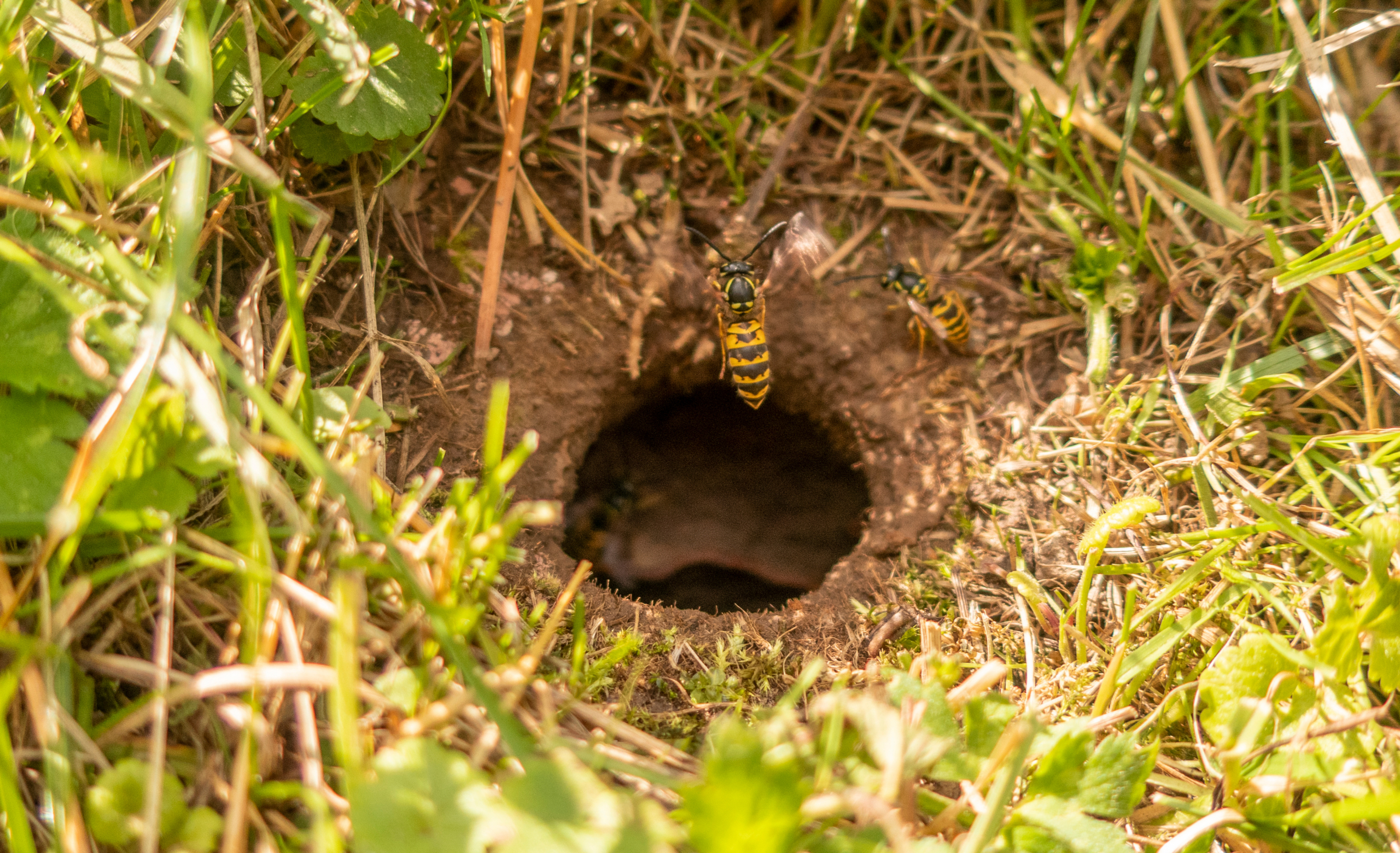
Your child was running through the grass, bare feet, mid-July, and suddenly stepped on something they never even saw coming. By the time you get outside, the crying has started, and so has the swelling. You scan the yard and spot a small hole in the ground near the fence line with wasps pouring out of it like a tiny, furious volcano.
Or maybe it happens differently at your house. You’re walking out the front door one morning and your kid brushes their arm against the doorframe. You look up and realize there’s a papery, honeycomb-shaped nest tucked right under the eave, about six inches above where little heads pass by every single day.
Both scenarios are real. Both happen in St. Louis every summer. And both raise the same urgent question: which type of wasp is actually more dangerous to your family, and what should you do about it? While you might be tempted to grab a can of spray, the safest first step is often a professional wasp exterminator who can identify the species and neutralize the threat before another sting happens.
First, Know What You’re Dealing With
Missouri is home to several species of stinging wasps, and they are not all the same. Before you decide on a course of action, it helps to know which one has moved in.
Ground-nesting wasps in St. Louis are most commonly yellow jackets, specifically the Eastern yellow jacket (Vespula maculifrons) and the German yellow jacket (Vespula germanica), which is especially prevalent in the St. Louis area. According to the Missouri Botanical Garden, these are the yellow jacket species you’re most likely to encounter here. They build paper nests underground, usually in abandoned rodent burrows or natural soil cavities, and the only visible sign is a small hole with wasps flying in and out. The nest itself can be completely invisible. By late summer, a single colony can house thousands of workers, all of them ready to defend their home aggressively.
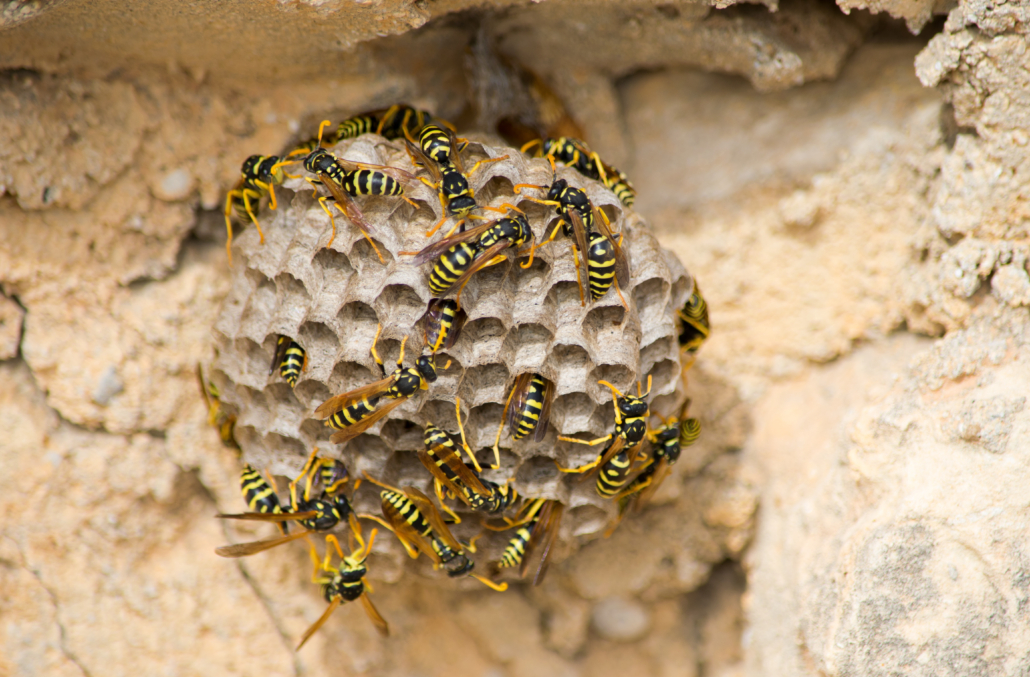
Eave-nesting wasps are most commonly paper wasps (Polistes species), and the Missouri Department of Conservation identifies them as the most familiar social wasps in our state. They build open, umbrella-shaped papery nests under eaves, porch overhangs, window frames, shutters, and soffits. Their nests are visible, which is both a warning and, in one sense, an advantage.
The Case for Ground Wasps Being More Dangerous
Here’s the thing about ground wasps, you almost never see them coming.
A child running, playing, or even just walking through the yard can disturb a yellow jacket colony without doing anything wrong. Yellow jackets are also highly sensitive to ground vibrations. Lawn mowers, kids on bikes, and dogs running through the yard can all trigger a defensive response. Unlike paper wasps, which will usually give you a moment’s warning, yellow jackets react fast, en masse, and without mercy.
The University of Missouri Extension notes that yellow jackets are most aggressive in late summer and fall, when colonies have reached peak population and workers are actively foraging for food. This timing is particularly dangerous because it coincides perfectly with back-to-school outdoor play, fall sports, and Labor Day cookouts, exactly when your kids are spending the most time outside.
A few more reasons ground wasps tend to be the bigger hidden threat:
The nest is invisible. There’s no visual cue to warn children to stay away. A paper wasp nest under the eave is at least something a parent can point to and say “don’t touch that.” A hole in the ground looks like a hole in the ground.
They’re attracted to food and garbage. Yellow jackets are scavengers. Outdoor birthday parties, cookouts, and open soda cans are yellow jacket magnets. Your child doesn’t need to be near the nest to get stung. They just need to be near a hot dog.
Multiple entrances. Underground nests often have more than one entry point, meaning the colony can swarm from multiple directions when disturbed.
The Case for Eave Wasps Being More Dangerous
Don’t underestimate the paper wasp just because it’s more visible.
Paper wasps build their nests directly in the spaces where human activity is highest: doorways, porch ceilings, window frames, playground equipment, and the undersides of deck railings. The Missouri Department of Conservation notes that a late-summer nest can bristle with dozens of wasps, and when they sense their nest is under attack, they will sting.
The problem for families with kids is proximity and repetition. A nest tucked into the corner of a doorframe or under a playset means your child is walking past it within arm’s reach multiple times a day. It only takes one bad morning, one accidental brush against the eave, one ball thrown too close to the porch ceiling.
Paper wasps are also overwintering pests, meaning queens seek shelter inside homes in the fall, slipping through gaps in soffits, window frames, and eave vents. What started as a nest outside can become a recurring indoor problem season after season if the underlying entry points are never addressed.
The Real Threat: Allergic Reactions
Whether the sting comes from the ground or the eave, the most serious danger is the same, anaphylaxis.
According to the American College of Allergy, Asthma and Immunology (ACAAI), there are an average of 72 deaths per year in the United States from insect stings. People who have experienced a previous allergic reaction have up to a 60% chance of a similar or more severe reaction if stung again.
Here’s the part that causes concern, many children don’t know they’re allergic until they’re stung for the first time. There is no way to predict who will have a severe reaction and who won’t. Symptoms of anaphylaxis can include difficulty breathing, swelling of the throat, a sudden drop in blood pressure, and loss of consciousness, and they can develop within minutes.
If your child is stung multiple times, which is entirely possible when a colony near a nest is disturbed, the risk compounds quickly.
Why DIY Wasp Spray Usually Makes Things Worse
The immediate instinct is to grab a can of wasp spray from the garage. We understand it. But for both ground nests and eave nests, over-the-counter aerosols carry real risks that most homeowners don’t consider at the moment.
For ground nests: Spraying into the entrance hole of a yellow jacket colony without treating all entrances, and without doing it after dark when workers are inside, almost always agitates the colony more than it eliminates it. A partially treated nest is an angry nest. The MU Extension specifically advises locating the nest during daylight and treating after dark, with a red-lensed flashlight, while being certain to identify all entrance holes first. That is not a casual Saturday morning project.
For eave nests: Knocking down a paper wasp nest with a broom or spraying it from below puts you directly in the flight path of the swarm. Paper wasps release an alarm pheromone when threatened that recruits other colony members to sting. The nest you can see is not necessarily all of the activity, as queens may already be overwintering inside your eave or soffit.
For both: Store-bought sprays address the surface. They don’t address why wasps chose your property in the first place, whether that’s standing water, structural gaps, food sources, or landscaping features that make your yard an ideal nesting environment.
What a Professional Wasp Exterminator Actually Does Differently
When Amco Ranger responds to a wasp problem, the process isn’t just “spray and leave.” It starts with an on-site consultation, because the treatment for a yellow jacket colony 18 inches underground is completely different from treating a paper wasp nest under a second-story eave.
Here’s what professional intervention looks like:
Species identification first. Treatment decisions depend entirely on what species is present, where the nest is located, and how established the colony is. A professional doesn’t guess.
Entry point assessment. One of the most overlooked parts of wasp control is understanding how they got there and what’s drawing them back. Our technicians check structural gaps, soffits, eave vents, and other access points that allow wasps, especially overwintering paper wasp queens, to enter your home’s structure.
Year-round protection. A one-time spray doesn’t stop next year’s queen from finding the same nesting spot under your eave in April. Amco Ranger’s ongoing service plans create a perimeter barrier that discourages wasps and other stinging insects from establishing on your property season after season. Learn more about our residential protection plans here.
St. Louis Timing: When Wasp Danger Peaks
April through May is when queens emerge from overwintering. This is the best time for preventative treatment, as nests are small and populations are low. If you notice paper wasps scouting eaves and overhangs in spring, that’s your window.
June through July, colonies grow rapidly. What was a small nest in May can have dozens or hundreds of workers by the Fourth of July.
August through September is peak danger season. Yellow jacket colonies are at maximum population, food competition is high, and workers are more aggressive. Fall sports practices, back-to-school outdoor time, and end-of-summer gatherings all collide with the most hostile period in the wasp calendar.
October is when queens begin seeking overwintering sites, including inside your home’s eaves, attic vents, and wall voids. This is when paper wasps become an indoor problem if structural vulnerabilities aren’t addressed.
When to Call a Wasp Exterminator Immediately
Some situations don’t require deliberation. Call AMCO Ranger right away if:
- You’ve found a ground nest in a high-traffic area of your yard, near a swing set, garden, walkway, or fence gate
- A child or pet has already been stung and you don’t know the full extent of the nest
- Anyone in your household has a known allergy to stinging insects
- The nest is larger than a golf ball or has significant activity
- You’ve found a nest inside or near a structural opening such as a vent, soffit, shutter cavity, or wall gap
- You’ve had a recurring wasp problem in the same location two or more years in a row
That last point matters more than most homeowners realize. Wasps don’t randomly choose their nesting spots. If they’ve come back to the same eave or the same corner of your yard, there’s a reason, and our St. Louis pest control experts can find it.
Protect Your Yard Before the Swarm Starts
Whether you’re already dealing with an active nest or simply want to make sure your yard is protected before peak season hits, Amco Ranger has been helping St. Louis and St. Charles families reclaim their outdoor spaces since 1965. We offer free, no-obligation on-site consultations and ongoing protection plans designed specifically for Missouri’s pest pressures.
Don’t wait for a scream from the backyard. Contact Amco Ranger today for your free inspection and let’s make sure this summer belongs to your kids, not the wasps.
Serving St. Louis, and St. Charles area St. Charles: (636) 441-BUGS (2847) St. Louis: (314) 373-BUGS (2847)

